Select Item below to DOWNLOAD - Once item is selected, right click and choose 'save as'


d69ad9cffe5d491f956ca46250d0b190
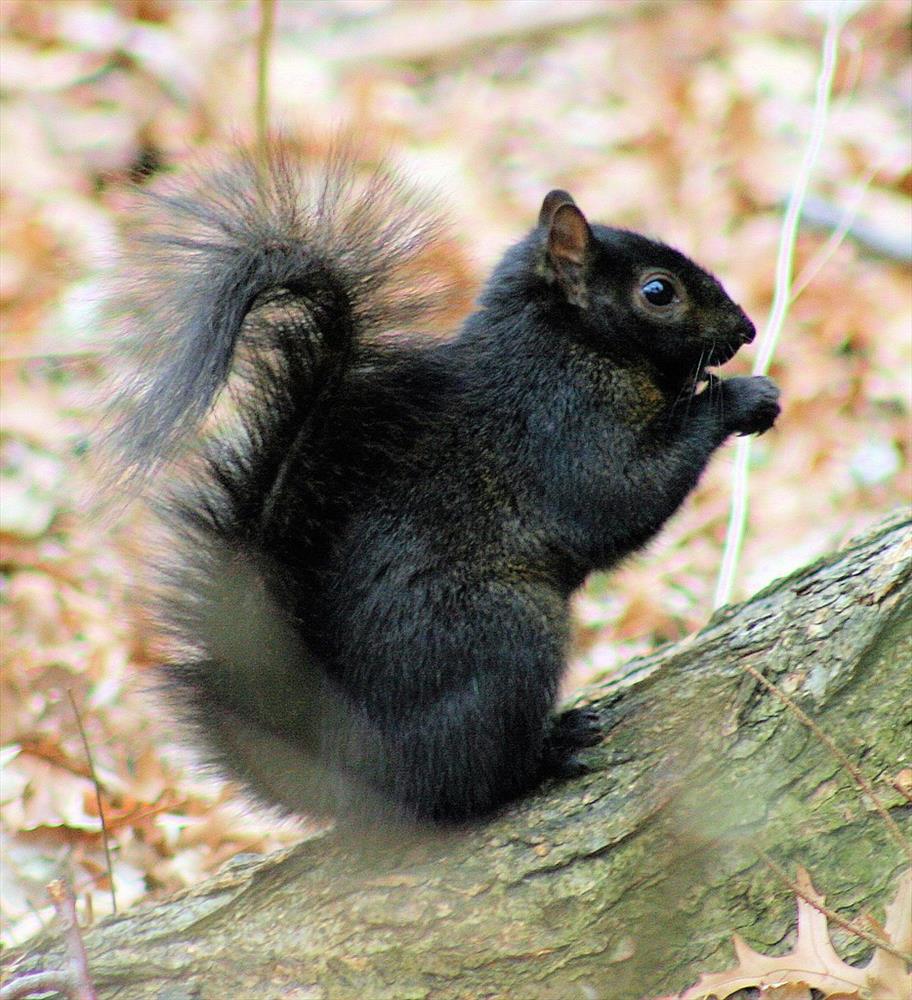
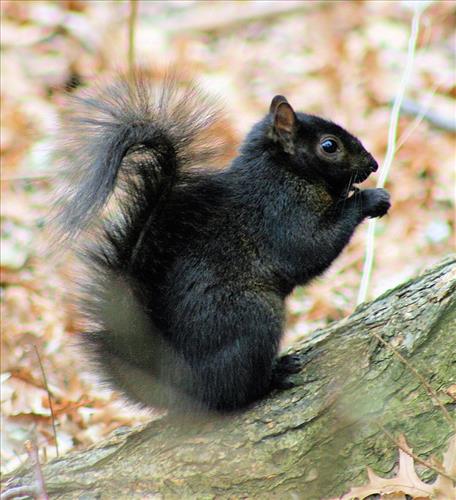
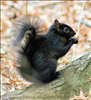
Melanistic gray squirrel (Sciurus carolinensis), Chesapeake & Ohio Canal National Historical Park, 2016.
Most visitors are familiar with the common gray squirrel but what about the melanistic gray squirrel, pictured here? Instead of the common gray or brown fur, they are a striking and conspicuous black color. Once much more common in the east, scientists believe that the black color became an evolutionary disadvantage as old-growth forests gave way to farmed and urban areas so that the lighter gray color provided better camouflage than black. The melanistic color gene is actually dominant and the gray color gene is recessive! That means a much higher percentage of the gray squirrel population carries both recessive gray genes. However, if a squirrel has even one melanistic gene then it will be partially or completely black. Winter is a great time to spot these conspicuous squirrels as they bound through the dry leaves on the forest floor.
U.S. National Park Service
Permission must be secured from the individual copyright owners to reproduce any copyrighted materials contained within this website.
Public domain
Image
Chesapeake and Ohio Canal National Historical Park, Code: CHOH
Title: Chesapeake & Ohio Canal National Historical Park
URL: https://www.facebook.com/chesapeakeandohiocanal/?fref=ts
URL: https://www.facebook.com/chesapeakeandohiocanal/?fref=ts
20160131
01/31/2016
Public Can View
Organization: Chesapeake & Ohio Canal National Historical Park
Address: 1850 Dual Highway, Suite 100, Hagerstown, MD 21740
Address: 1850 Dual Highway, Suite 100, Hagerstown, MD 21740
Thursday, December 8, 2016 7:53:20 PM
Thursday, August 10, 2017 10:15:34 AM
black.jpg
Monday, January 1, 0001 12:00:00 AM
jpg
294.2 kB
Scenic