Select Item below to DOWNLOAD - Once item is selected, right click and choose 'save as'

a0954f4d-c577-4514-9eb6-35322b99039c
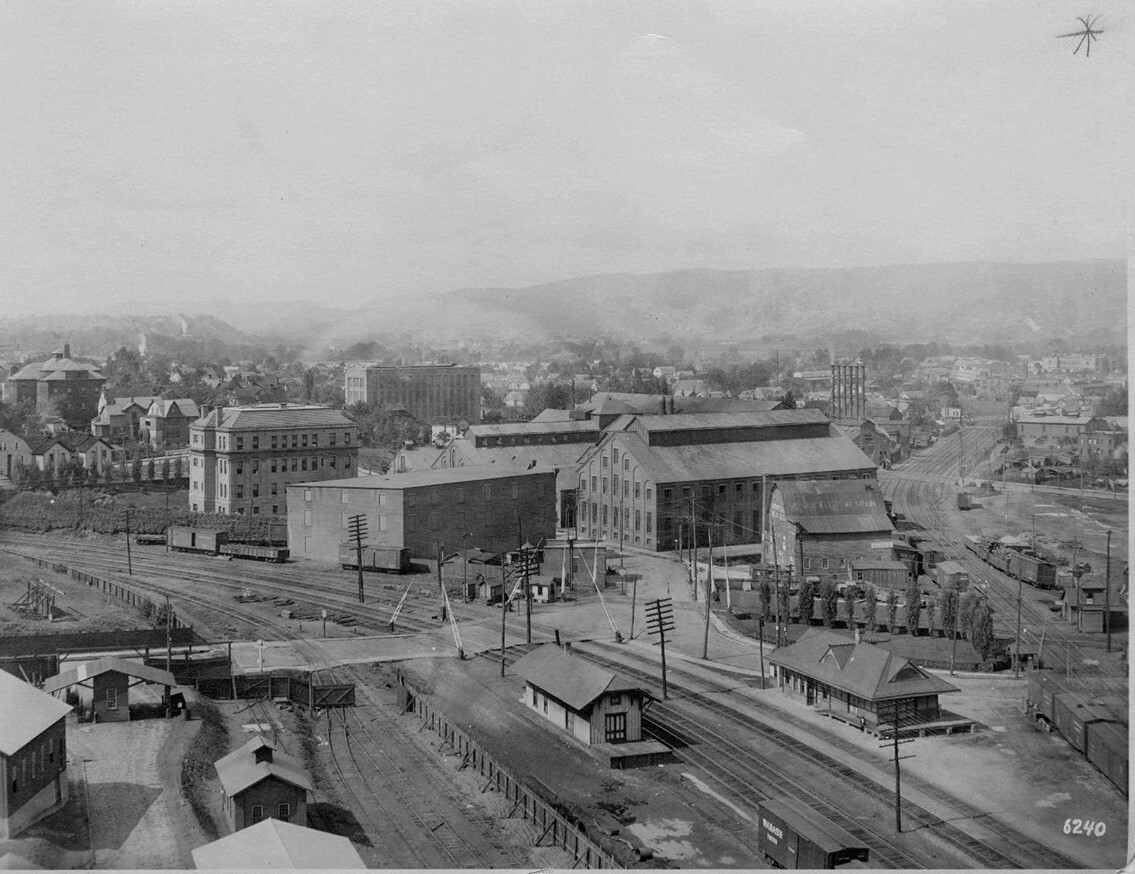
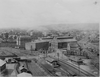
Photograph. "Vulcan Iron Works" view 2
Photograph, black & white, cropped to edges. Vulcan Iron Works in Luzerne County, PA. Mounted on linen; left margins pierced for ring binder; dimensions, L 19.0, W 24.0 CM. Each ff. includes a hand-lettered identification and cover sheet. 1918- [1921-24]-1930
From the Museum Collection: Photographs. 24 black & white photographs of the Vulcan Iron Works in Luzerne County, PA: One ff: 13 views, Wyoming Valley Plant (Locomotive Shops), Wilkes Barre PA. One ff: 3 views, West Pittston Plant. One ff: 8 views, "OH. Steel Plant" (Buttonwood). Mounted on linen; left margins pierced for ring binder; dimensions, L 19.0, W 24.0 CM. Each ff. includes a hand-lettered identification and cover sheet. 1918- [1921-24]-1930
The Vulcan Iron Works was founded in 1867 by Richard Jones. The entire property included a machine shop, foundry, blacksmith-boiler shop, pattern store, and an office. The company began to expand as early as 1883 by acquiring the Pittston Iron Works and Wilkes-Barre Iron Works. Soon after this it opened branch offices in Hanover Township, West Pittston, and Tamaqua. It wasn't until its 1888 takeover of the Wyoming Valley Manufacturing Company, a small locomotive builder, that Vulcan officially entered the locomotive building market. Like competitors Porter and the Davenport Locomotive Works, Vulcan's most popular early wheel arrangements were 0-4-0Ts and 0-6-0Ts (also known as "dinkies"). Vulcan built some 108 different designs during its existence. Through the turn of the 20th century the manufacturer continued to grow and became Pennsylvania's third largest locomotive producer. At the time of the first World War, the company began producing its largest wheel arrangements including 2-8-0 Consolidations and 2-6-2 Prairies. Following the war Vulcan began manufacturing non-steam powered locomotives originally meant for use in the mining industry. These included battery and gasoline operated designs that could be used to move coal both in the mine and outside the shaft. By World War II the Vulcan Iron Works had reached its peak, employing more than 2,500. Vulcan Iron Works survived into the diesel era, but in 1954 Vulcan declared bankruptcy and closed its doors soon after. Today, you can still find their steam locomotives at places in Michigan and Maine.
Permission must be secured from the individual copyright owners to reproduce any copyrighted materials contained within this website. Digital assets without any copyright restrictions are public domain.
Steamtown NHS Museum Collection
Public domain:Full Granting Rights
Image
Steamtown National Historic Site, Code: STEA
Steamtown National Historic Site, Lackawanna County, Pennsylvania
Latitude: 41.407600402832, Longitude: -75.6704025268555
Latitude: 41.407600402832, Longitude: -75.6704025268555
1918- [1921-24]-1930
10/18/2021
Public Can View
Monday, October 18, 2021 10:04:51 AM
Monday, October 18, 2021 11:20:17 AM
230599236_4519080408104461_1978691534402206396_n.jpg
Monday, October 18, 2021 5:59:35 PM
jpg
277.4 kB
Scenic