Select Item below to DOWNLOAD - Once item is selected, right click and choose 'save as'

be0d71ec3fa24eaba2eacc931f4c586b
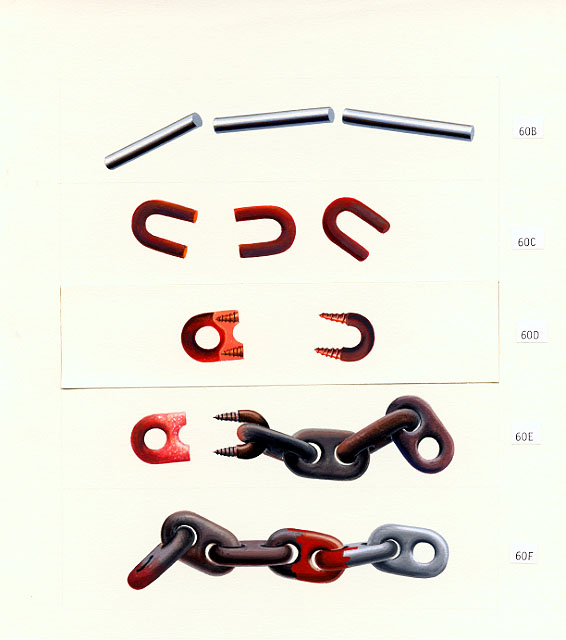
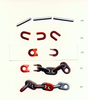
Die-lock chainmaking process diagram (top to bottom):
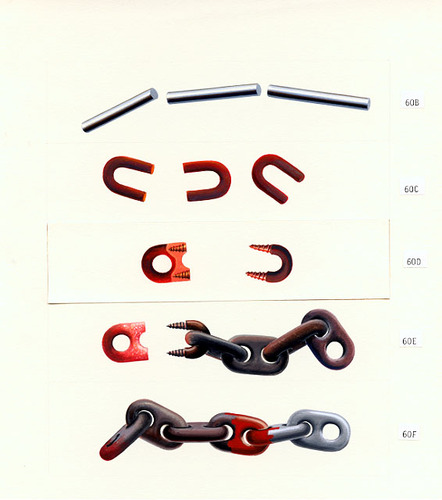
Die-lock chainmaking process diagram (top to bottom):
1) rolled nickel-steel rods (from 3/4-inch to 4-3/4 inch in diameter) are cut into shorter bars; 2) the cut bars are heated in a gas furnace to 2100 degrees Fahrenheit. The now-malleable bars are bent by machine into U-shapes; 3) The U-bars are stamped to form stems, with tapered and ridged ends, or they have holes punched in the ends to form sockets; 4) the stem is hooked onto the last completed link and placed in a die; the socket is heated, and the two are joined under a 10,000-pound hammer; 5) the link is completed and a red undercoat and grey paint helps retard rusting.
Abbr=PUB
U.S. National Park Service
Project=Charlestown Navy Yard Handbook; Art_Registration_No=PUB-0118 ; Reflective Art
Government owns art and all reproduction rights.
Public domain
Gouache and/or acrylic, (HFC ArtMedium)
Image
Boston National Historical Park, Code: BOST
Boston National Historical Park, Suffolk County, Massachusetts
Latitude: 42.3734016418457, Longitude: -71.0557022094727
Latitude: 42.3734016418457, Longitude: -71.0557022094727
Image Management System : IMS 09129
20190904
01/01/1995 - 12/30/1995
Image_Size=8" x 9-1/2"; Count: 5/5; HFC-Publications' Charlestown Navy Yard handbook, page 60
MC B1
Public Can View
Organization: Harpers Ferry Center
Address: Harpers Ferry Center, 67 Mather Place, Harpers Ferry, WV, 25425, 304-535-5050
Address: Harpers Ferry Center, 67 Mather Place, Harpers Ferry, WV, 25425, 304-535-5050
Thursday, October 3, 2019 1:15:54 PM
Thursday, October 3, 2019 1:15:54 PM
09129.jpg
jpg
52.2 kB
Museum