Select Item below to DOWNLOAD - Once item is selected, right click and choose 'save as'


54a3db9b02584537bb153b81889bee8b
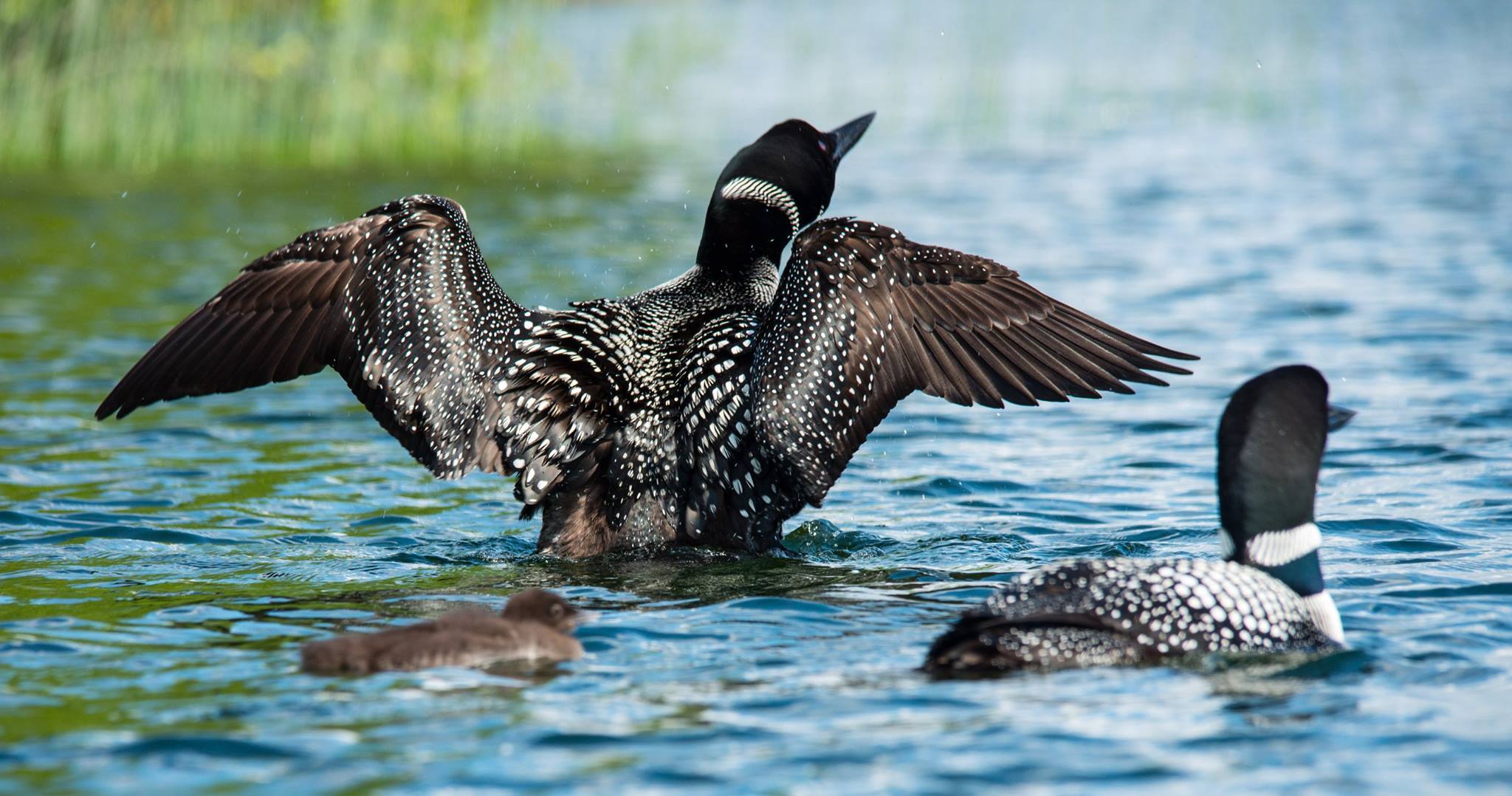
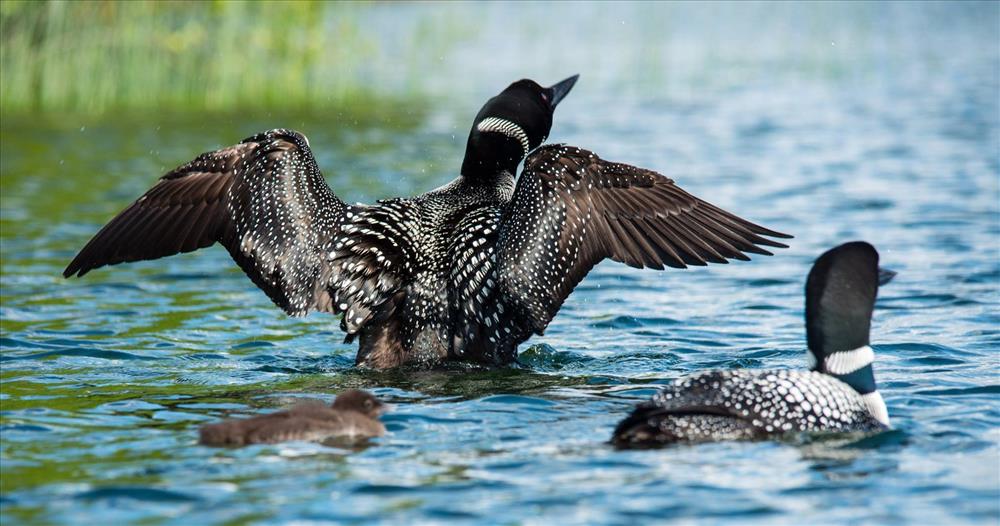
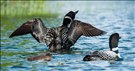
Great northern loons with chick, Sleeping Bear Dunes National Lakeshore, 2015.
You may know the great northern loon as the common loon (Gavia immer). These adults are still in breeding plumage, with a black head, white underparts and a checkered black-and-white mantle. After breeding season the plumage returns to shades of brown with a white chin and foreneck. From a distance you may be able to easily see recognize the common loon by its horizontal bill positioning. Amazingly, the loon has a number of solid bones, which is very unlike the normally-hollow avian bones. This extra weight aids in the loon's diving prowess but may also be one of the reasons the bird requires a long distance to gain momentum for flight take-off. Loons have the ability to dive as deep as 60 meters (200 feet) for as long as 3 minutes. Like all divers, this species is a specialist fish-eater.
U.S. National Park Service
Permission must be secured from the individual copyright owners to reproduce any copyrighted materials contained within this website.
Public domain
Image
Sleeping Bear Dunes National Lakeshore, Code: SLBE
20150627
06/27/2015
Public Can View
Organization: Sleeping Bear Dunes National Lakeshore
Address: 9922 Front Street, Empire, MI 49630
Address: 9922 Front Street, Empire, MI 49630
Friday, December 9, 2016 8:47:15 AM
Wednesday, August 9, 2017 7:52:38 PM
loon2.jpg
Monday, January 1, 0001 12:00:00 AM
jpg
260.9 kB
Scenic