Select Item below to DOWNLOAD - Once item is selected, right click and choose 'save as'

209e998db8394985aa330060ea9f193c

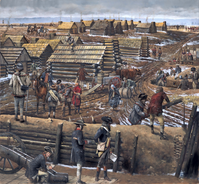
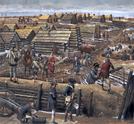
Artist's interpretation of the Continental Army's 1777-1778 winter encampment at Valley Forge, Pennsylvania.
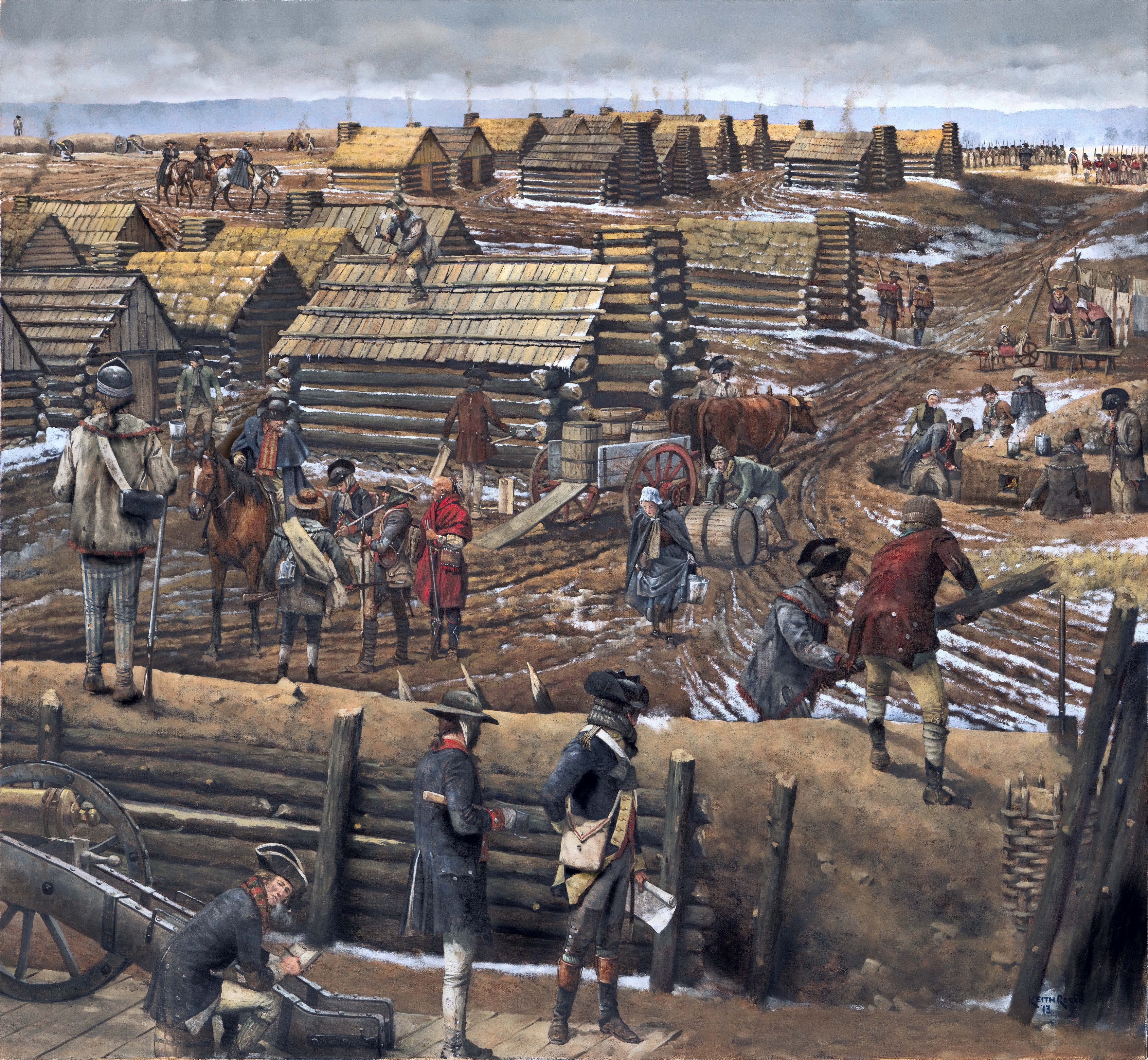
Artist's interpretation of the Continental Army's 1777-1778 winter encampment at Valley Forge, Pennsylvania.
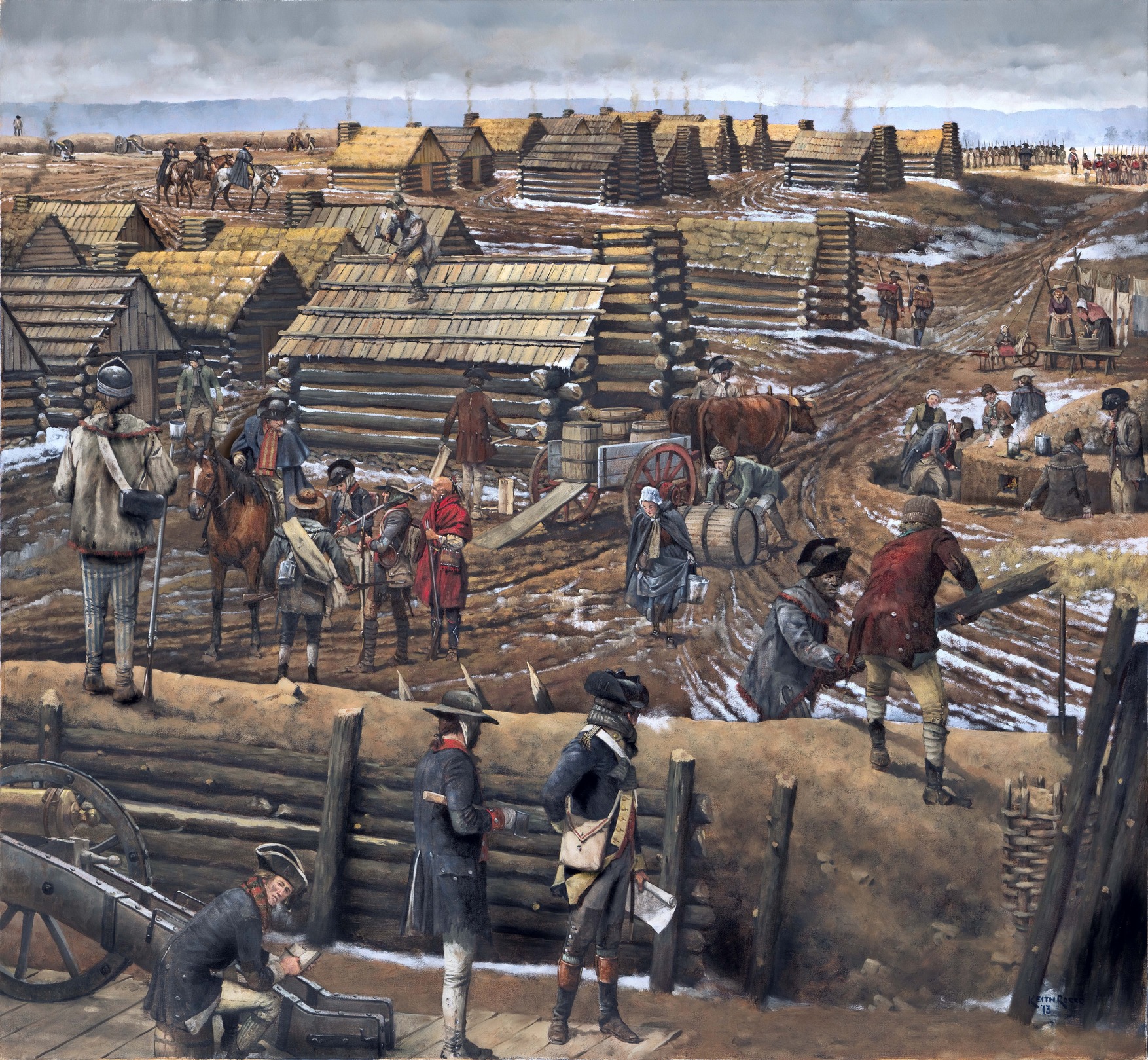
The view concentrates on the foreground with detailed camp activities and soldiers going about their daily camp lives. Camp conditions shown are rough with muddy, rutty paths, but also include log huts in parallel lines along planned avenues. Scenes of cooking are represented by both the mounds that house the bake ovens and the additional cook fires encircling the bake oven mounds. Lasting six months, the encampment would become the fourth largest city in America with 1,500 logs huts and two miles of fortifications, and diverse as any city with people who were free and enslaved, wealthy and impoverished. The 12,000 soldiers and 400 women and children of the encampment are depicted as individuals of diverse economic conditions, ethnicity (including a variety of European, African ancestry, African Americans and Native American Indian tribes such as the Oneida as well speakers of several languages and followers of several religions) and gender (such as camp followers, relatives of soldiers, or wives of officers). Gen. George Washington is depicted on horseback in the upper left portion of the illustration and Gen. Friedrich von Steuben is shown training and drilling troops in the upper right portion of the illustration.
Abbr=PUB
U.S. National Park Service
Project=Folder; Art_Registration_No=P12PX15330.1 ; Reflective Art; Digital File
Government owns art and all reproduction rights.
Public domain
Image
Valley Forge National Historical Park, Code: VAFO
Valley Forge National Historical Park, Pennsylvania
Latitude: 40.0988998413086, Longitude: -75.4446334838867
Latitude: 40.0988998413086, Longitude: -75.4446334838867
Image Management System : IMS 10935
20190904
01/01/2012 - 12/30/2012
Count:1/1; Valley Forge National Historical Park brochure
PR 18
Public Can View
Organization: Harpers Ferry Center
Address: Harpers Ferry Center, 67 Mather Place, Harpers Ferry, WV, 25425, 304-535-5050
Address: Harpers Ferry Center, 67 Mather Place, Harpers Ferry, WV, 25425, 304-535-5050
Wednesday, October 9, 2019 11:23:54 AM
Wednesday, October 9, 2019 11:23:54 AM
10935.jpg
jpg
6.6 MB
Museum