Select Item below to DOWNLOAD - Once item is selected, right click and choose 'save as'



c1fedcb3-370b-4dc1-9824-f6ff5ee13640
Dogs
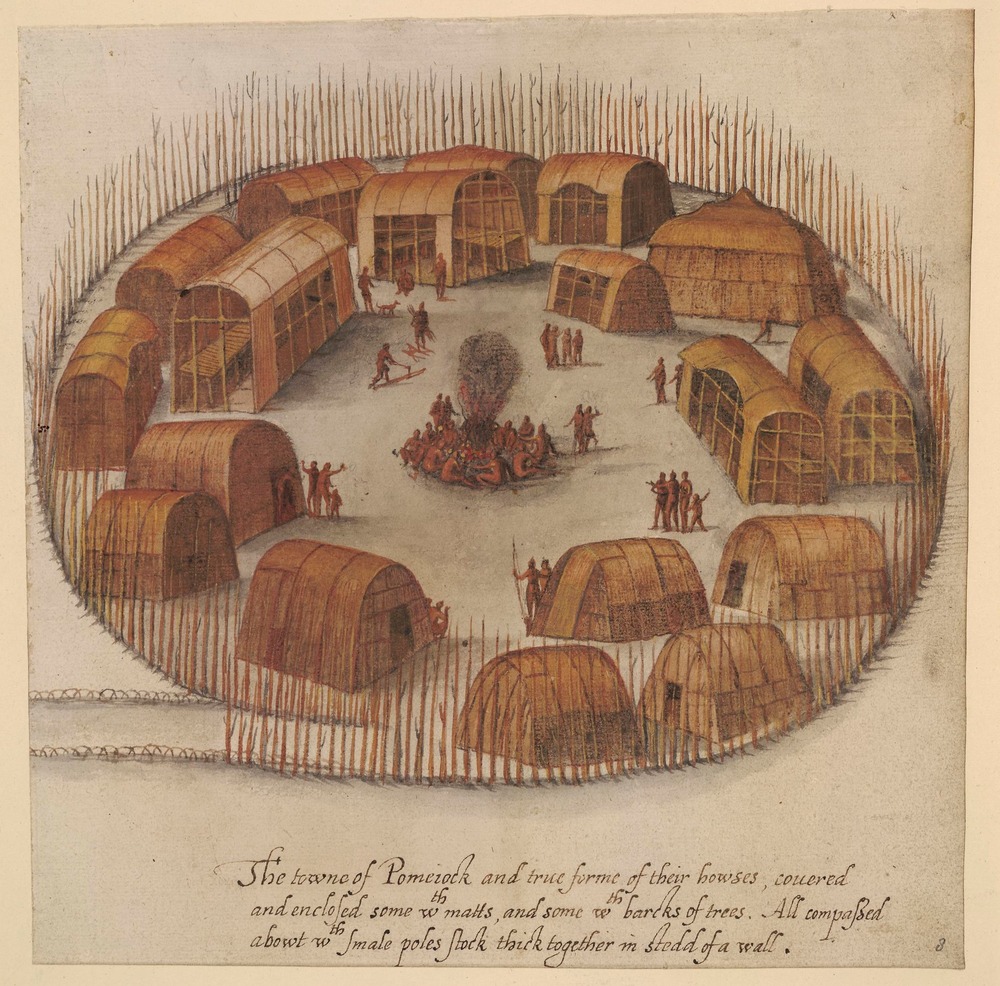
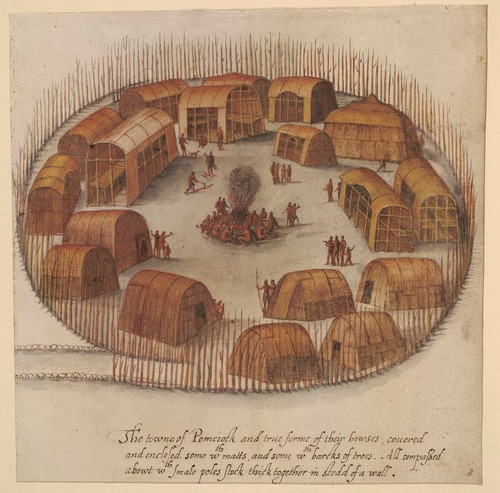
A watercolor painting of an American Indian town with people seated around a cooking fire at the center. Handwritten words at the bottom of the image describe the town.
Illustration of the town of Pomeiock by John White, Jamestown Yorktown Foundation collection.
Description: John White, an English colonist, included a dog in his depiction of a coastal Carolina American Indian town, pictured above. Dogs were described too in written accounts, and their remains have been found by archeologists in American Indian sites. These dogs were knee-height, about 20 pounds, tan in color, and may have had slightly curled tails.
Uses: For the most part, dogs were not pets in American Indian society like they are today. They slept outside and were probably not fed by people. It is unclear exactly what relationship people had with these dogs. They may have helped hunt turkeys and other birds. Archeologists have found dogs buried in graves alongside humans. There are a variety of possible reasons for this, ranging from the practice of burying the possession of an enemy, ritual sacrifice, or as part of a funeral practice.
Permission must be secured from the individual copyright owners to reproduce any copyrighted materials contained within this website. Digital assets without any copyright restrictions are public domain.
Jamestown Yorktown Foundation collection
Public domain:Full Granting Rights
Image
Captain John Smith Chesapeake National Historic Trail, Code: CAJO
Captain John Smith Chesapeake National Historic Trail
Latitude: 38.7776985168457, Longitude: -77.0294036865234
Latitude: 38.7776985168457, Longitude: -77.0294036865234
05/05/2021
05/05/2021
Public Can View
Friday, May 7, 2021 9:43:50 AM
Friday, May 7, 2021 9:43:50 AM
DOGBritishMuseumJohnWhite.jpg
Wednesday, May 5, 2021 10:06:16 PM
jpg
1.3 MB
Scenic