Select Item below to DOWNLOAD - Once item is selected, right click and choose 'save as'


b850ad45-98d3-4d3e-b190-f2492e05b24a
Fault Types
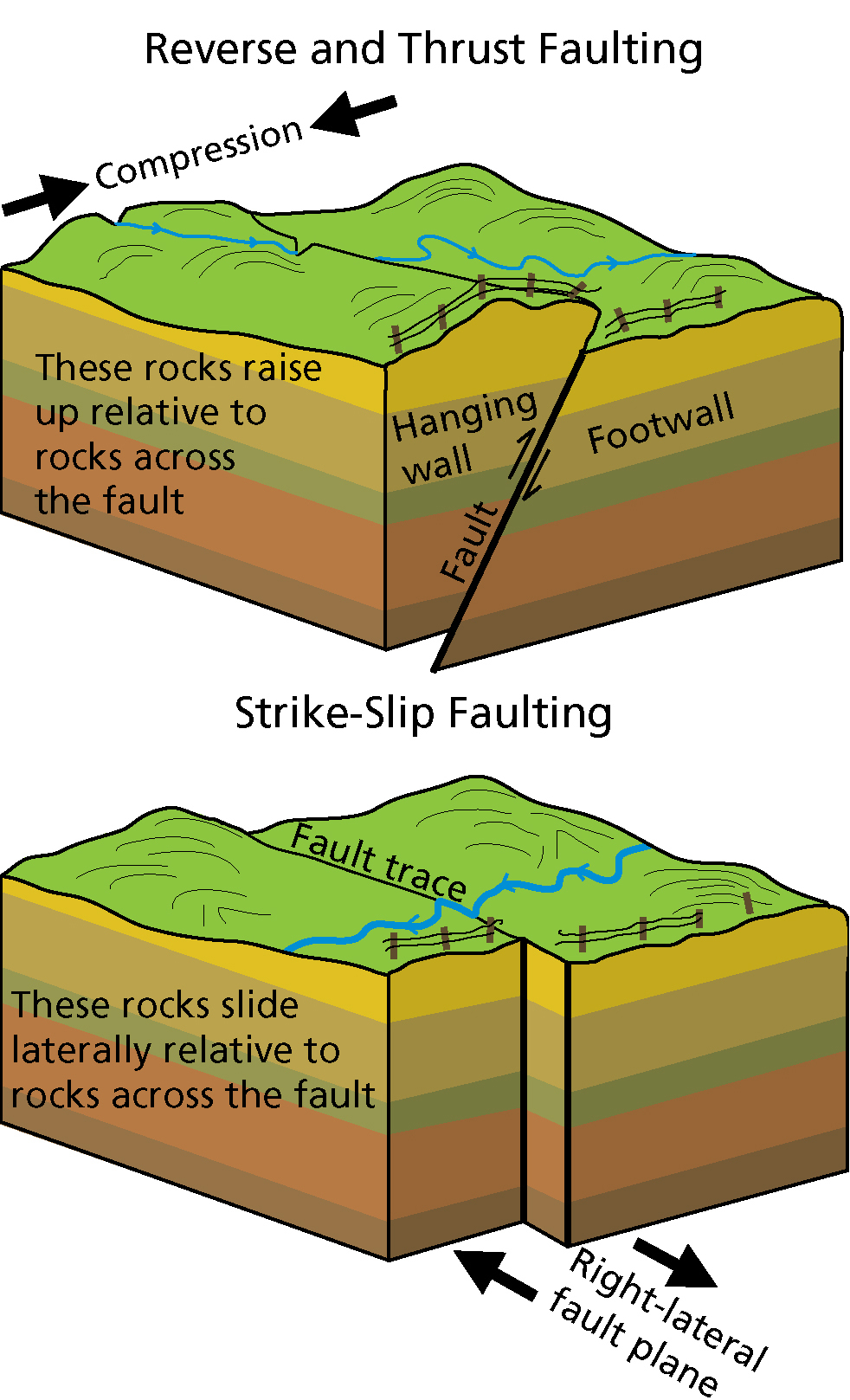
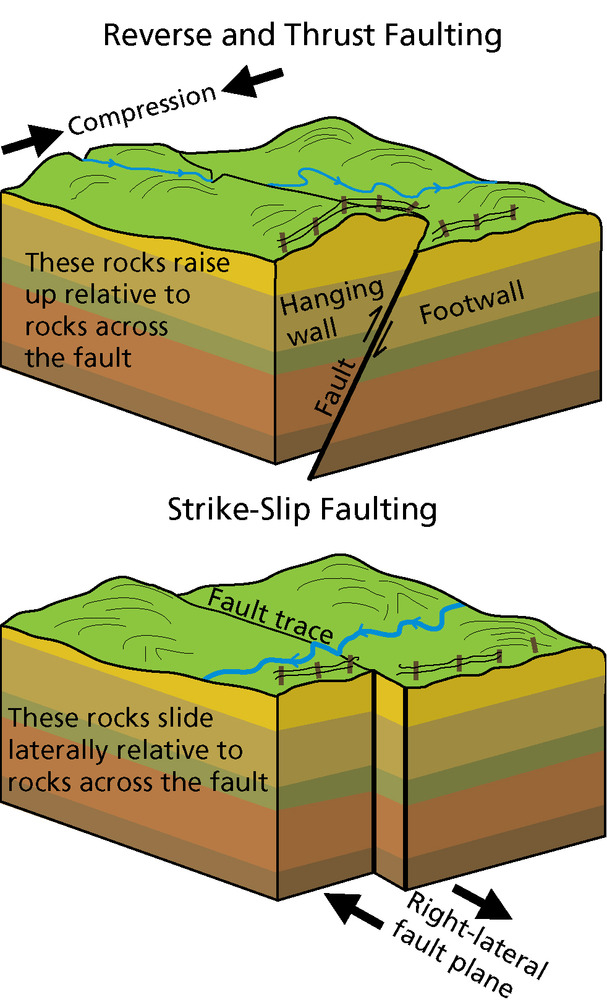
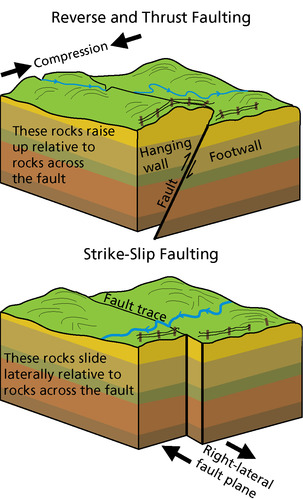
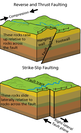
Two graphics showing reverse/thrust faulting, and strike-slip faulting.
The three principal fault types are strike-slip,
reverse, and normal (see fig. 5). Movement occurs along a fault plane. Footwalls are below the fault plane, and hanging walls are above. In a normal fault (see fig. 5), crustal extension (pulling apart) moves the hanging wall down relative to the footwall. Faults mapped in the vicinity of the monument are normal faults. In a reverse fault, crustal compression (squeezing together) moves the
hanging wall up relative to the footwall. A thrust fault is a type of reverse fault that has a dip angle of less than 45°. In a strike-slip fault, movement is horizontal. When movement across a strike-slip fault is to the right, it is a right-lateral strike-slip fault, as illustrated above. When movement is to the left, it is a left-lateral strike-slip fault.
Permission must be secured from the individual copyright owners to reproduce any copyrighted materials contained within this website. Digital assets without any copyright restrictions are public domain.
Graphic by Trista Thornberry-Ehrlich (Colorado State University).
Public domain:Full Granting Rights
Image
Casa Grande Ruins National Monument, Code: CAGR
Casa Grande Ruins National Monument, Pinal County, Arizona
Latitude: 32.996898651123, Longitude: -111.532997131348
Latitude: 32.996898651123, Longitude: -111.532997131348
01/01/0001
Public Can View
Wednesday, July 21, 2021 2:08:09 PM
Wednesday, July 21, 2021 2:41:57 PM
Figure_6_fault types 1 column TTE-01.jpg
Monday, January 1, 0001 12:00:00 AM
jpg
663.7 kB
Scenic