Select Item below to DOWNLOAD - Once item is selected, right click and choose 'save as'


b4932ccc-dd4c-471c-ad55-4ffdb76cd612
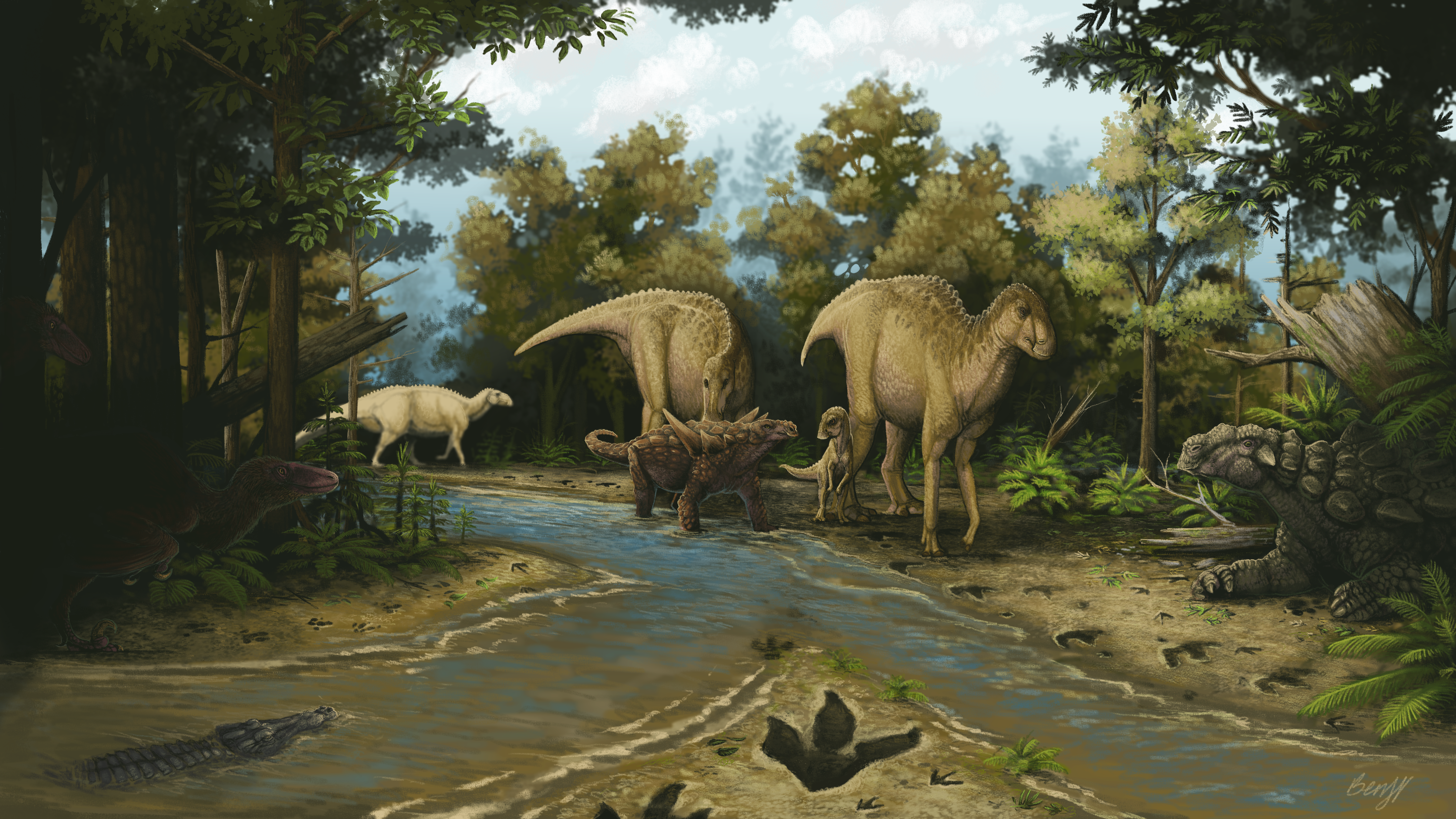
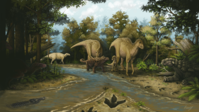
COLM Naturita Paleo Art Mural
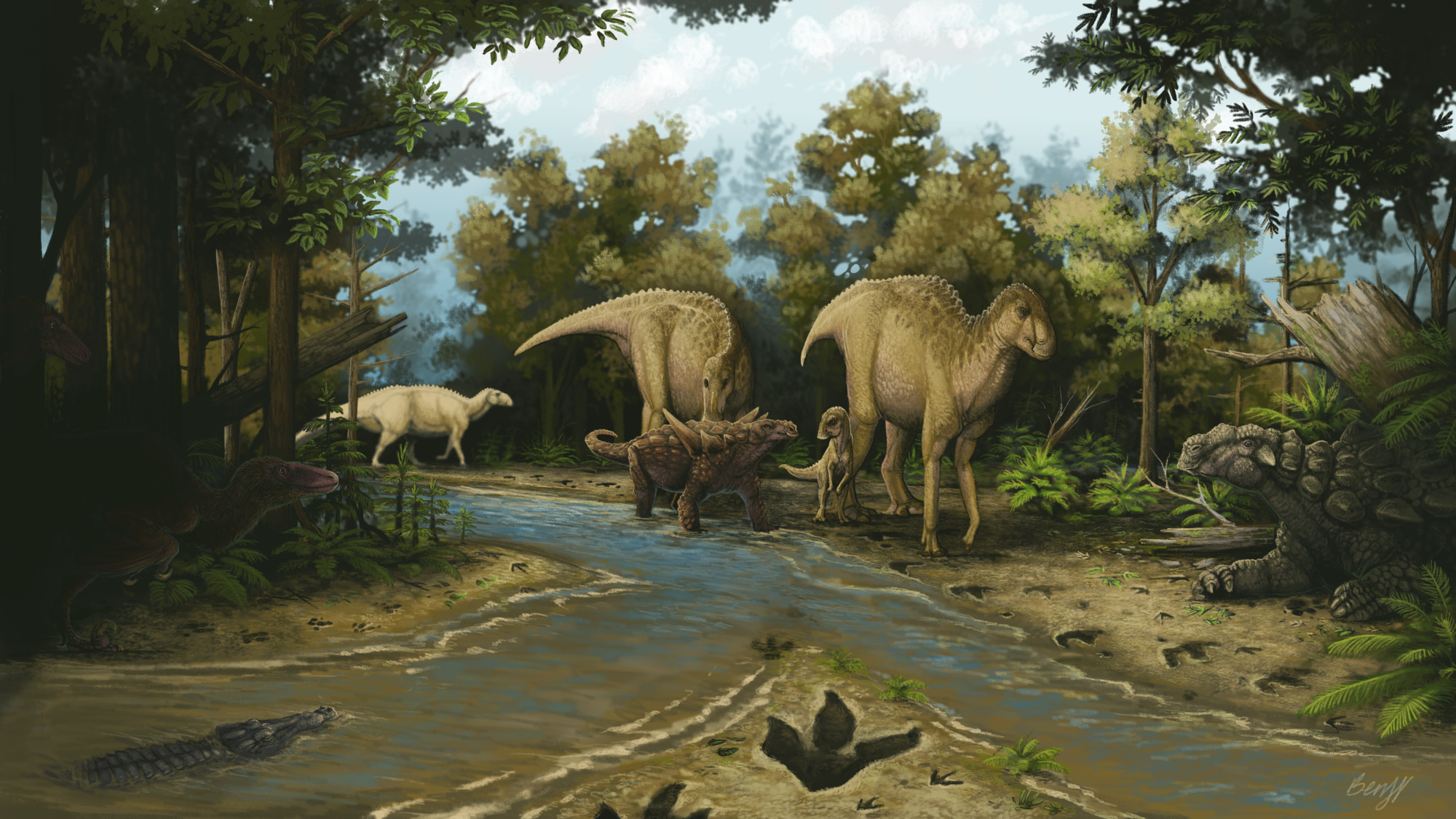
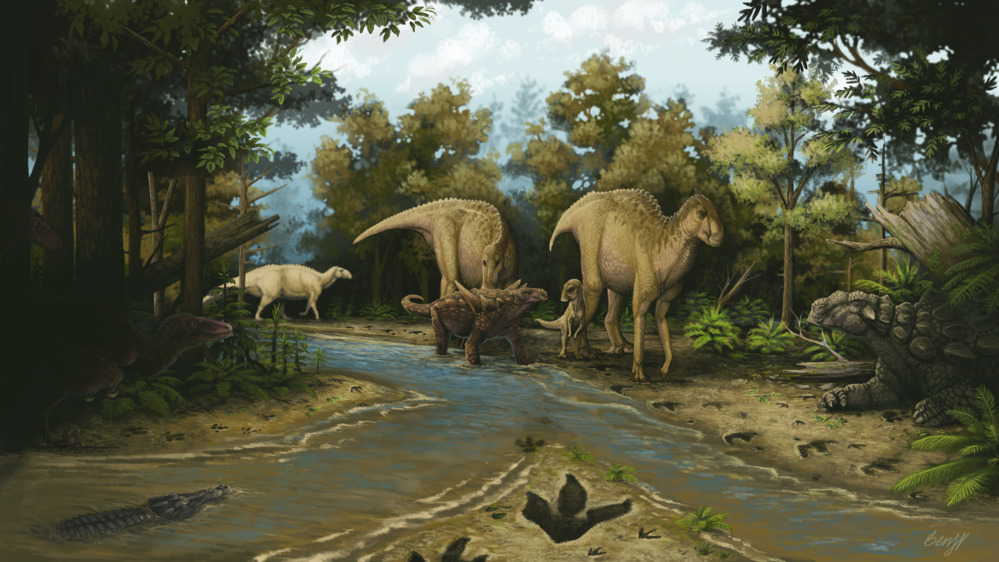
A group of early hadrosauroids, accompanied by a moderate-sized nodosaurid, walk through a coastal forest filled with ferns and early flowering plants (including relatives of modern sycamores and magnolias). A different, much larger nodosaurid (right) and a pair of dromaeosaurids (left) watch from the forest margins, while a goniopholidid ‘croc’ swims through the stream (bottom-left). An assortment of additional dinosaur footprints are recorded in the sediment, including those of other hadrosauroids and dromaeosaurids as well as a large predatory theropod (bottom-center). This scene takes place along the shoreline of the encroaching Western Interior Seaway that would soon cover much of North America, including western Colorado.
Colorado National Monument during the middle Cretaceous, roughly 100-million-years-ago, highlighting some of the fossils that have currently been identified from the Naturita Formation.
A group of early hadrosauroids, accompanied by a moderate-sized nodosaurid, walk through a coastal forest filled with ferns and early flowering plants (including relatives of modern sycamores and magnolias). A different, much larger nodosaurid (right) and a pair of dromaeosaurids (left) watch from the forest margins, while a goniopholidid ‘croc’ swims through the stream (bottom-left). An assortment of additional dinosaur footprints are recorded in the sediment, including those of other hadrosauroids and dromaeosaurids as well as a large predatory theropod (bottom-center). This scene takes place along the shoreline of the encroaching Western Interior Seaway that would soon cover much of North America, including western Colorado.
Permission must be secured from the individual copyright owners to reproduce any copyrighted materials contained within this website. Digital assets without any copyright restrictions are public domain.
NPS/Benji Paysnoe
Public domain:Full Granting Rights
Image
Colorado National Monument, Code: COLM
Colorado National Monument, Mesa County, Colorado
Latitude: 39.0503997802734, Longitude: -108.692001342773
Latitude: 39.0503997802734, Longitude: -108.692001342773
Public Can View
Tuesday, September 16, 2025 6:33:38 PM
Tuesday, September 16, 2025 6:36:36 PM
COLM Naturita PaleoArt_2025.png
png
18.2 MB
Scenic