Select Item below to DOWNLOAD - Once item is selected, right click and choose 'save as'

6020c9b1f5004b59ab58a64ef33f3544
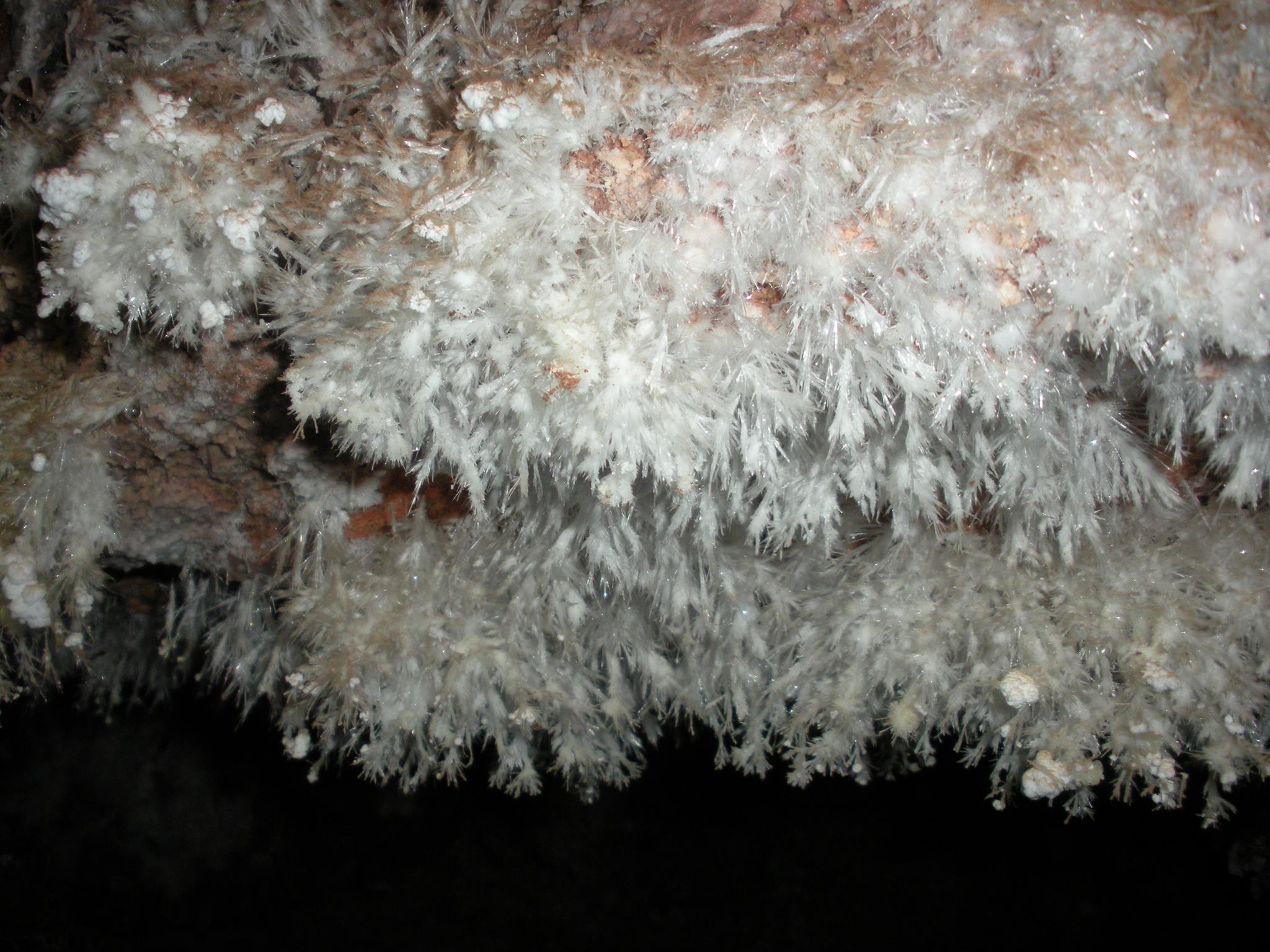
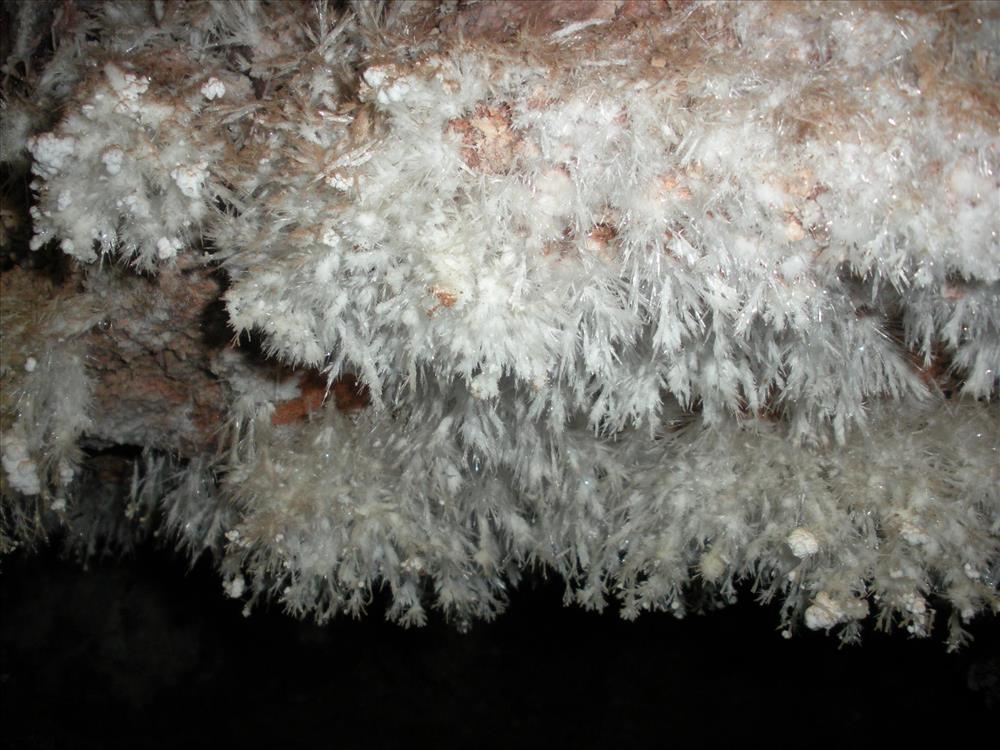
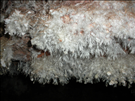
Frostwork, Wind Cave National Park, 2014.
Frostwork is made of calcium carbonate (just like calcite); however, it has a different internal crystalline structure. When the crystals are large, you can distinguish the crystal habit of aragonite from calcite. Aragonite has long, acicular (needle-like) crystals while calcite tends to be stubby and rhombohedral. Bushes of this acicular aragonite crystals are known as frostwork. A process known as 'magnesium-poisoning', coined by geologist Robert Folk, describes the phenomenon by which certain solutions supersaturated with calcite are eventually prohibited from precipitating calcite due to high magnesium concentrates! Magnesium somehow interferes with the lateral growth of calcite crystals but not aragonite. Basically, evaporation drives up the concentration of ionic species. As calcium is lost to precipitation, the magnesium-to-calcium ratio increases until calcite growth is inhibited (at about 2.9:1). Thus, aragonite is deposited after this point. This is why you see a common progression of calcite to aragonite precipitates due to evaporative enrichment.
U.S. National Park Service
Permission must be secured from the individual copyright owners to reproduce any copyrighted materials contained within this website.
Public domain
Image
Wind Cave National Park, Code: WICA
Title: Wind Cave National Park
URL: https://www.facebook.com/pages/Wind-Cave-National-Park/127899503922510?fref=ts
URL: https://www.facebook.com/pages/Wind-Cave-National-Park/127899503922510?fref=ts
20140912
09/12/2014
Public Can View
Organization: Wind Cave National Park
Address: 26611 US Highway 385, Hot Springs, SD 57747-6027
Address: 26611 US Highway 385, Hot Springs, SD 57747-6027
Friday, December 9, 2016 8:42:01 AM
Wednesday, August 9, 2017 9:16:23 PM
frostwork.jpg
Monday, January 1, 0001 12:00:00 AM
jpg
370.2 kB
Scenic