Select Item below to DOWNLOAD - Once item is selected, right click and choose 'save as'





5A0191EC-155D-451F-67A801CBA6D09F20
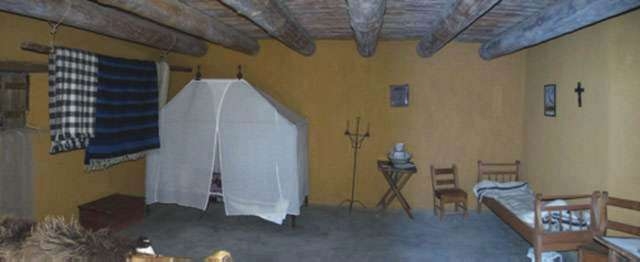
St. Vrain's Room
Trapper and Taos trader, Ceran St. Vrain was the son of a noble family dispossessed during the French Revolution of 1789. He was well-known and highly respected in Santa Fe, and his relationships in New Mexico were invaluable to the Bents. When St. Vrain was away, his quarters became a guest room. One of the most notable guests was Lieutenant James Abert, a topographical engineer surveying the west with a U.S. Army expediton. In 1845, Abert described peace talks between the Cheyenne and the Delaware, and sympathized with the changes forced on the Indians by white settlers. As a naturalist, he sketched and studied the plants and animals of the area. While recuperating from an illness in 1846, the drew plans of the fort, which provided architects with the necessary information to rebuild it in 1976.
Trapper and Taos trader, Ceran St. Vrain was the son of a noble family dispossessed during the French Revolution of 1789. He was well-known and highly respected in Santa Fe, and his relationships in New Mexico were invaluable to the Bents. When St. Vrain was away, his quarters became a guest room. One of the most notable guests was Lieutenant James Abert, a topographical engineer surveying the west with a U.S. Army expediton. In 1845, Abert described peace talks between the Cheyenne and the Delaware, and sympathized with the changes forced on the Indians by white settlers. As a naturalist, he sketched and studied the plants and animals of the area. While recuperating from an illness in 1846, the drew plans of the fort, which provided architects with the necessary information to rebuild it in 1976.
U.S. National Park Service
Permission must be secured from the individual copyright owners to reproduce any copyrighted materials contained within this website. Digital assets without any copyright restrictions are public domain.
Public domain:Full Granting Rights
Image
Bent's Old Fort National Historic Site, Code: BEOL
Bent's Old Fort National Historic Site
7/16/2010 12:32:26 PM
Public Can View
Sunday, December 31, 2017 7:06:04 AM
Sunday, December 31, 2017 7:06:04 AM
5A019A18-155D-451F-67D60122E66E7E74.jpg
Monday, January 1, 0001 12:00:00 AM
jpg
46.9 kB
Scenic