Select Item below to DOWNLOAD - Once item is selected, right click and choose 'save as'


3957d841-d021-4d1d-b0fb-df286468aa96
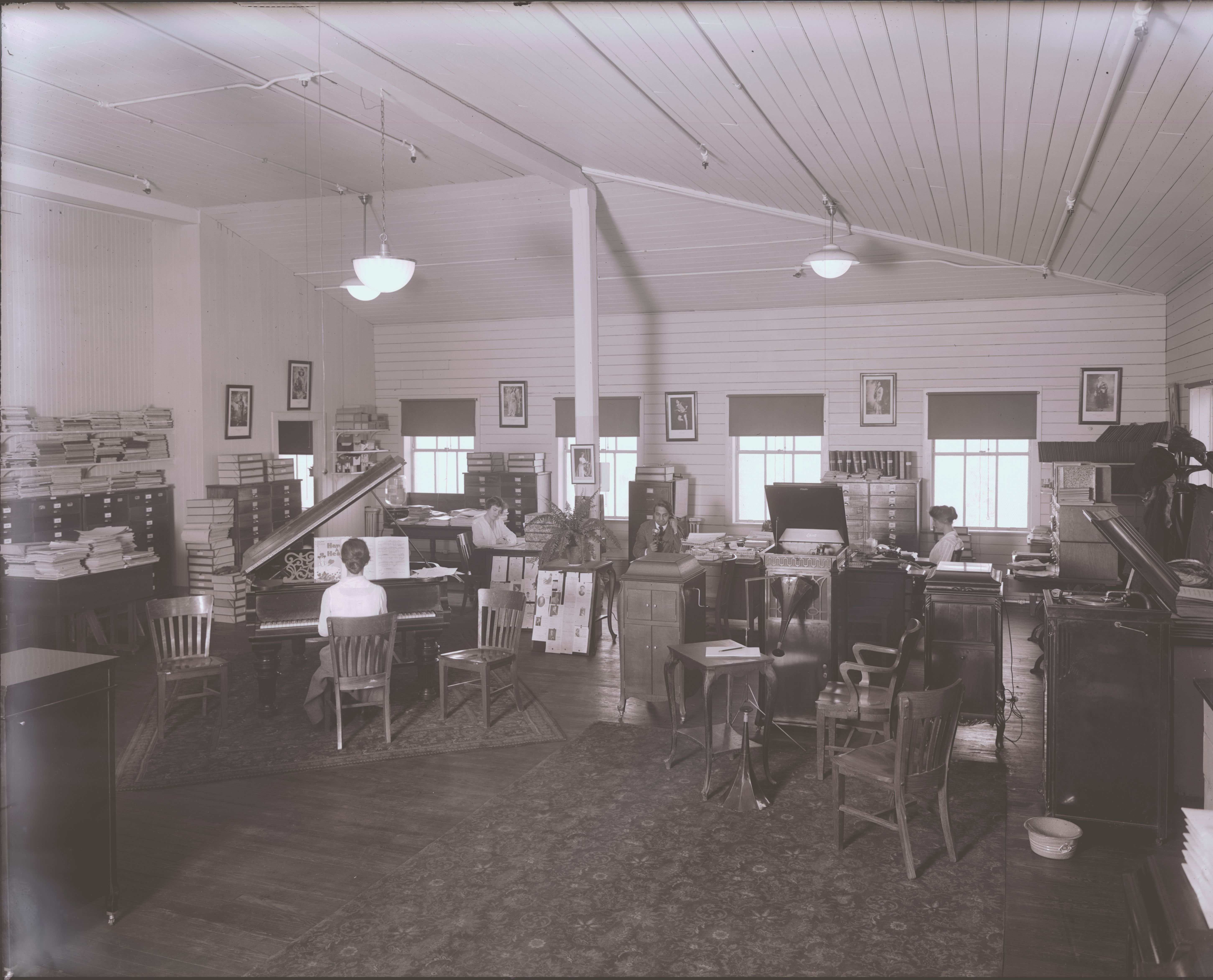
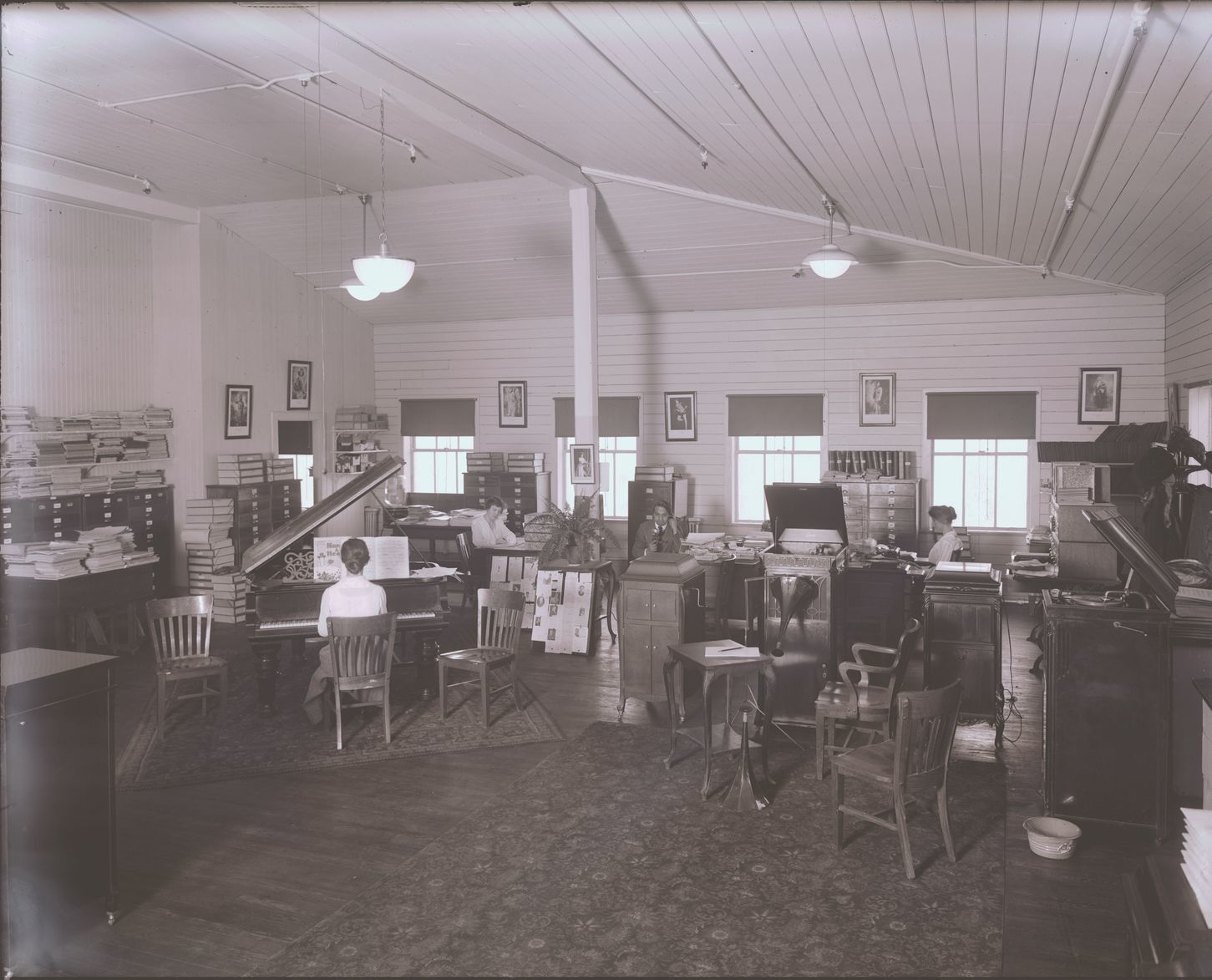
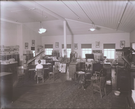
Edison Laboratory Music Room, January 8, 1917
During the era of the Edison Diamond Disc record (1911-1920s), Thomas Edison personally took a lead role in choosing the artists and repertoire for record releases. His evaluation work took place in the Edison Laboratory Music Room. There, Edison listened to phonograph recordings and ¿live¿ music sung by a vocalist and/or played on the piano. Clarence Hayes managed the Music Room. Having a background as both a vocalist and a bookkeeper, Hayes organized Edison¿s written evaluation comments, sang vocal compositions, and supervised assistants. Hayes acted as a liaison for information passed between Edison, the recording studio, the advertising department, and the manufacturing departments.
This photograph, taken on January 8, 1917, illustrates the function of the Music Room. It shows four employees: Hayes speaks on the telephone, two women do paperwork, and a pianist plays a composition. Thomas Edison is absent from the photograph, but the place where he sat is evident. A notepad and pencil rest on the table in front of four disc phonographs, left to right: a Victor Victrola, an Edison C-250, a Columbia Grafonola, and an Edison A-250 (or B-250.) A hearing aid made from a Fireside phonograph horn hangs in front of the C-250 machine. Edison listened to recordings through the horn to compensate for his hearing impairment. As he listened, he took notes of his aural observations.
uncropped scan from glass plate negative
Permission must be secured from the individual copyright owners to reproduce any copyrighted materials contained within this website. Digital assets without any copyright restrictions are public domain.
Public domain
Image
Thomas Edison National Historical Park, Code: EDIS
Thomas Edison National Historical Park, Essex County, New Jersey
Latitude: 40.7859992980957, Longitude: -74.2397994995117
Latitude: 40.7859992980957, Longitude: -74.2397994995117
Local Park number : 10-389-084-N01
PMIS (Project Management Information System) : 152308
Legacy NPS Focus Record ID : 248944
PMIS (Project Management Information System) : 152308
Legacy NPS Focus Record ID : 248944
01/08/1917
Public Can View
Wednesday, February 4, 2009 10:25:18 AM
Wednesday, August 9, 2017 5:18:18 PM
EDIS-2859e29a3c8d49a690cb53604abf4442.tif
Wednesday, August 13, 2008 4:02:09 PM
tif
34.4 MB